


By Lydia Le
Arkansas TV Intern
Hendrix College Class of 2026, Majored in English with a focus in Film and Media
The state has been facing a prolonged heatwave, this summer, with record-high temperatures that do not drop overnight. Arkansans may recall the summers of 2005, 2006, 2011 or 2012, when local farmers and water providers adapted to the impacts of drought. In this week’s episode, host Chris Kane and guests will discuss the current heatwave, how Arkansan communities are responding, and what viewers can do to protect themselves and their loved ones from the heat.
“Arkansas Week” airs Friday, Aug. 28, at 6 p.m.
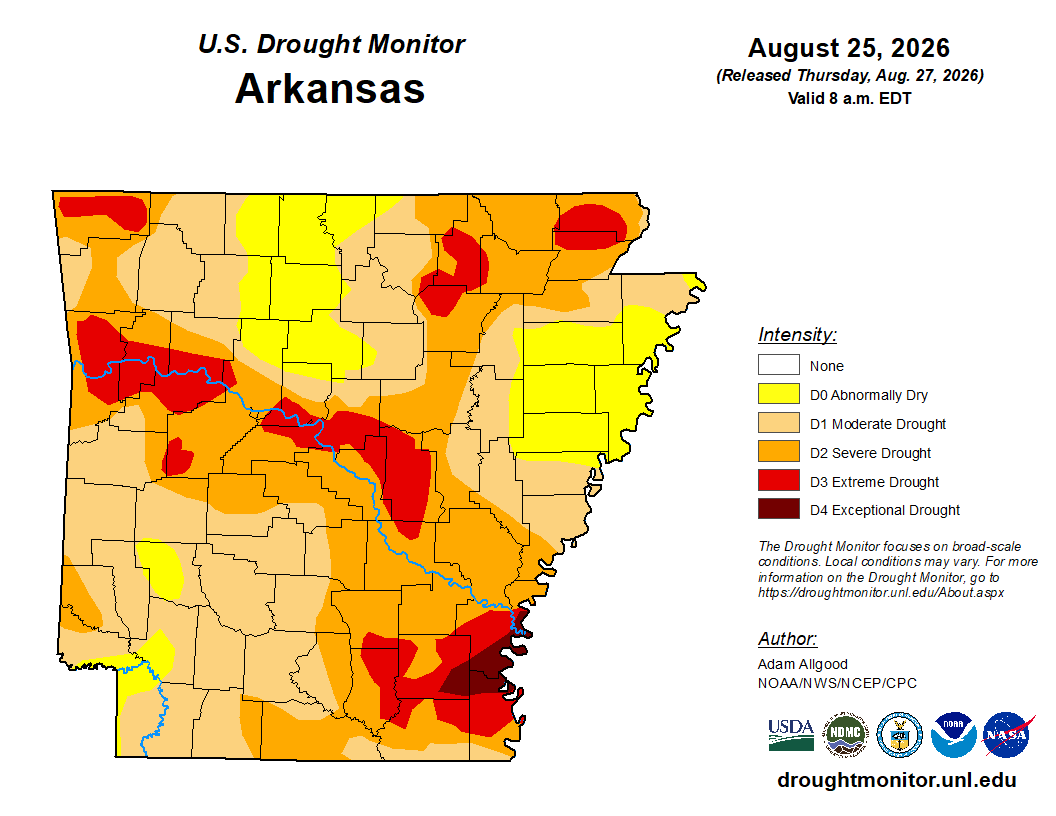
“[If] the hundred-degree days continue, we’ll be hitting some of our most historic drought and heatwave levels in Arkansas’s recorded history. So, this is not your typical Arkansas heat. It is putting a lot of pressure on” … “the people that live in the state and, of course, a lot of the industries.”
– Dennis Cavanaugh; Meteorologist, NWSLR
IMPACTS ON ARKANSAS'S COMMUNITIES
Forestry: You may have noticed that some of our trees have developed fall foliage prematurely. Secretary of the Arkansas Department of Agriculture Wes Ward reports that this is an effect of the heat wave. To survive the increased temperatures and lack of water, trees will first develop a waxy coating on their leaves, then enter the dormant state typically seen in colder months. Although intended to aid water retention, the wax coating on dry leaves increases their flammability. This can turn a controlled wildfire for a balanced ecosystem into a safety hazard to both the forest and its residents.
“Just about the entire state is under risk of a wildfire danger, so we monitor that [constantly, and] we’re prepared to respond quickly to any fire that develops”
– Wes Ward; Secretary, Arkansas Department of Agriculture
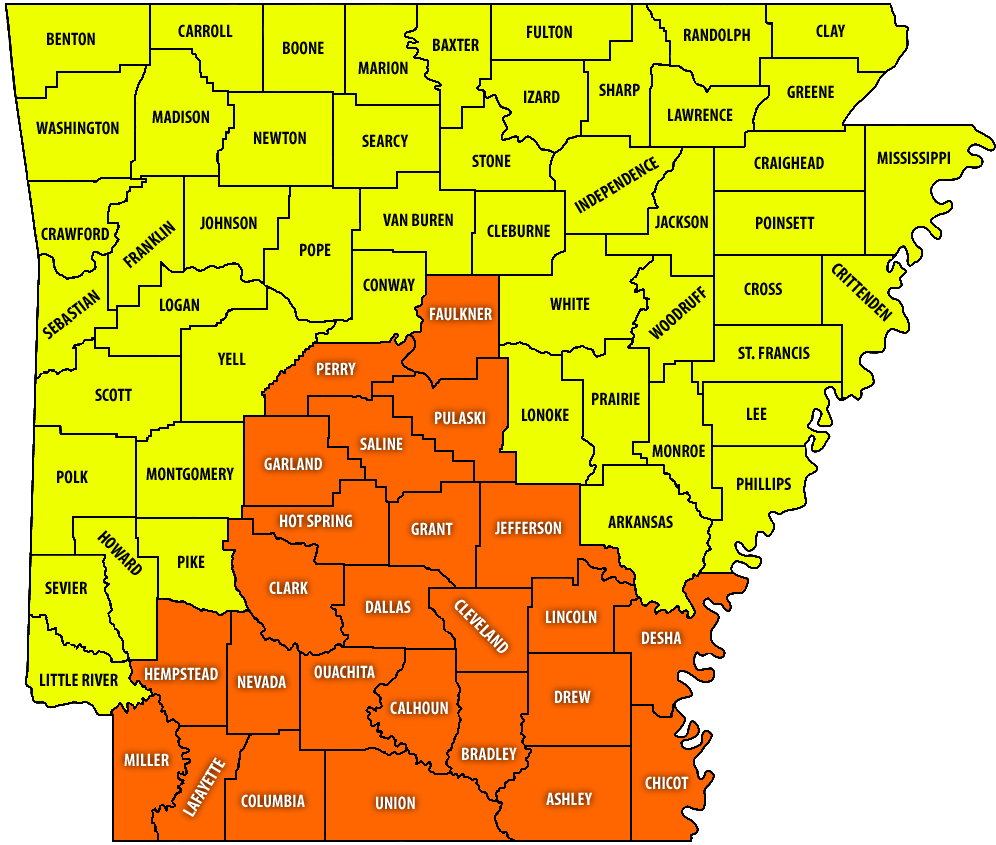
Agriculture: This summer is one of several that have impacted Arkansas’s farms in recent history. Jarrod Harke, a rice extension agronomist with the University of Arkansas Division of Agriculture voices concerns from farmers surrounding insufficient rainfall and depleted water reserves. Drought conditions correlate with increased cost of production, smaller crop yields and disease susceptibility. To continue to grow and maintain healthy crops, farmers are turning to alternative schedules and new techniques for combatting the persistent heat.
“On average, we need 10 to 15 inches of rain in one month just to make up the difference, just to bring us back up to what we would consider an average or normal level. That’s a lot… We’re looking at a multi-month recovery.”
– Dennis Cavanaugh
Irrigation: Conway Corporation CEO Bret Carroll discussed the impact of the drought on the Conway water supply. The city is currently in Phase 3 of its emergency water curtailment plan, a response to Brewer Lake, a crucial community water source, experiencing low water levels. To maintain and support citywide infrastructure long term, Conway Corp has reduced residential irrigation from three days to one day a week and limited all forms of irrigation. The organization is working to tighten operations by fixing leaks and encourage users to limit nonessential uses of water. While these precautionary measures are being taken, Carrol reasons that, “if we could get four to six inches over a two to three day period… That could very likely take us to Phase 2 of the curtailment.”
“Stay cool, stay hydrated, and stay connected.”
– Riva Brown, PhD; Executive Director, American Red Cross Greater Arkansas
COMMUNITY RESPONSE (AND HOW YOU CAN HELP)
Both individual and collective responses are crucial to mitigating the effects of natural disasters. Extreme heat is no exception. In Arkansas, the American Red Cross has been recruiting and deploying volunteers in their local areas to provide access to heat protections and wildfire assistance. To volunteer or to access educational resources, visit the American Red Cross Greater Arkansas website. For more information on ways to beat the heat, visit the American Red Cross article Extreme Heat is Too Dangerous to Be Invisible. You can also access an extensive list of first aid and safety tools through their various free mobile apps.
OUR FEATURED PANELISTS
- Dennis Cavanaugh; Meteorologist, National Weather Service Little Rock
- Wes Ward; Secretary, Arkansas Department of Agriculture
- Jarrod Hardke; Rice Extension Agronomist, University of Arkansas Division of Agriculture
- Bret Carroll; CEO, Conway Corporation
- Riva Brown, PhD; Executive Director, American Red Cross Greater Arkansas
FOR MORE INFORMATION

HOW TO WATCH
Tune in to "Arkansas Week" Fridays at 6, and watch again on ATV-1 Saturdays, at 5 p.m., Sundays, at 9:30 a.m., and Mondays, at 6 p.m. Watch anytime on demand at our YouTube channel.
Catch the repeat episode on maternal health and doulas Friday, Sept. 6, at 6 p.m.
Find past episodes, links and resources mentioned at arkansastv.gov/arkansasweek.