

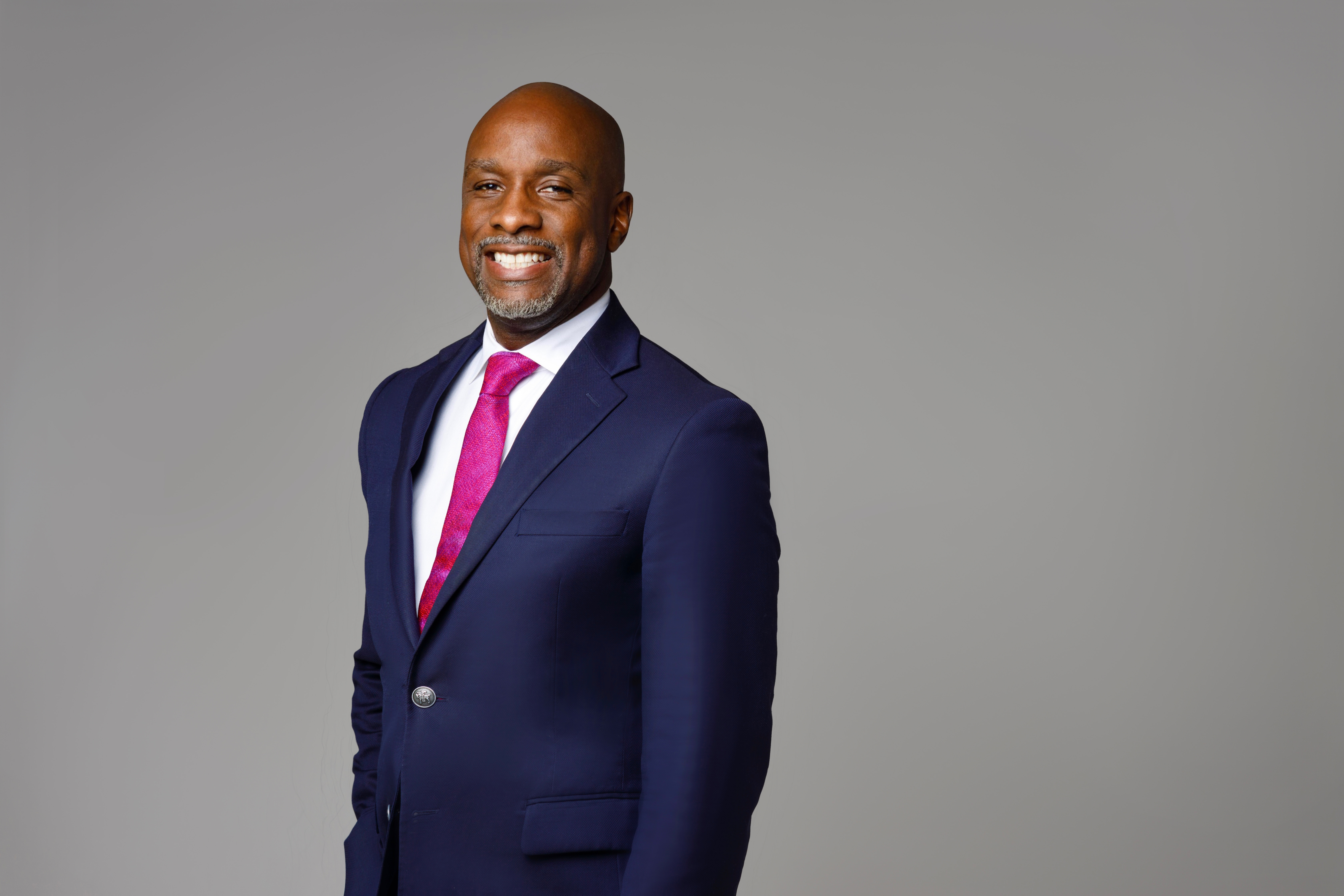
By Eddie Armstrong,
Host of “Stronger With Armstrong Podcast”
Lately, I have found myself thinking about two young boys. The first is the 8-year-old I once was. I remember my mother sending me to the corner doughnut shop and trusting me to bring back her change. Somewhere along the way, a man asked me if I could spare some money. I did not stop to think about what that money meant to my mother or our household. I simply opened my hand and gave him what I had.
At 8 years old, I did not have the words for service, leadership or civic responsibility. I just knew someone seemed to need help, I had something I could give and helping him felt like the right thing to do.
Of course, I learned another lesson when I got home: while it matters, so does wisdom. My family could not easily afford for me to give that money away. Still, the instinct behind that decision never left me.
“Stronger With Armstrong Podcast” premieres on Arkansas TV Tuesday, Oct. 6, at 6 p.m.
The second boy I have been thinking about is my son. He was 9 when I first told him about an idea that would eventually become “Stronger with Armstrong.” He did not hesitate.
“Yes, Daddy, you should do it. You should put it on YouTube so we can get enough subscribers to win a platinum award.” He understood YouTube better than I did. What he could not have understood yet was how much his encouragement mattered.
After serving in elected office, I was not particularly eager to put myself back into the public spotlight. My son helped me see the idea differently. And that got me thinking: if one conversation between a father and his child could change my perspective, what might happen if we created more opportunities for honest conversations between people all across Arkansas?
People from different generations. Different communities. Different professions. Different races. Different political parties. Different life experiences. Not conversations where we wait for our turn to speak, but conversations where we actually listen. Looking back, I realize conversations like that have been changing the direction of my life for as long as I can remember. In some ways, they may have helped save it.
Standing Between Two Futures
Growing up in the 1990s, the dangers facing young Black men in communities like mine were not abstract. Gang violence was taking young lives. Drugs could look like a faster path to money and status than a regular job. Becoming a father before you were emotionally or financially prepared was a very real possibility. For too many young men, simply reaching adulthood was not guaranteed.
I was close enough to those choices to feel their pull. I explored joining a gang. I thought about running with the wrong crowd. I was exposed to opportunities to sell drugs. Some of the people offering those choices were not strangers. They were friends and young men from my own community.
The streets offered something every young person wants: a sense of belonging. They offered identity, recognition and the feeling that you were part of something bigger than yourself. When you are young, those things can be powerful. The consequences can feel a long way off.
My mother saw what was happening. At one point, she faced the painful decision of whether to send me to live with my father because she did not believe she could carry the responsibility alone. I understand that moment differently now that I am a parent. She was not giving up on me. She was trying to save me with the options available to her. But she did not have to do it by herself.
My family, my church and people in my community stepped in. Adults corrected me. They encouraged me. Sometimes they told me things I did not want to hear. Most importantly, they refused to treat me as a lost cause. They saw something in me before I could fully see it in myself.
Then another door opened.
Another Kind of Belonging
One of the most important influences of my young life was the Arkansas Martin Luther King Jr. Commission. At the same time, I was deciding whether I would follow the crowd around me, the Commission showed me another world. I had opportunities to travel, serve, meet leaders and represent something larger than myself. I was exposed to people like Coretta Scott King, the Rev. Billy Kyles, Andrew Young, Richard Mays and Harold Ford Jr.
These were people whose lives demonstrated a very different kind of influence. They showed me that respect did not have to come from fear. Recognition did not have to come from the street. You could build an identity through service. You could earn credibility through discipline.
You could become somebody by helping other people. The Commission trusted me with some of my earliest responsibilities as a young ambassador for Arkansas.
Long before I carried a microphone, served in elected office, ran a business or led an organization, somebody trusted me to represent my community and my state. That responsibility changed the way I saw myself. Service became my alternative to the streets.
When Service Opened the World
Before graduating from high school, I attended Arkansas Boys State, where young men from communities across Arkansas elected me governor. That experience opened my eyes.
Many of those young men did not look like me. They had grown up in different communities and circumstances. Yet they placed their trust in me. It taught me something I still believe today: when people have the opportunity to actually know one another beyond race, geography, politics and assumptions, they often discover more common ground than they expected.
As my career began, that world kept getting bigger. I had the opportunity to work for Don Tyson and to see the agricultural and poultry industries surrounding Tyson Foods up close. I met farmers, employees, businesspeople and community leaders whose work helped build one of Arkansas's most consequential companies.
I also watched Northwest Arkansas and Bentonville transform. Places that once felt small and familiar became centers of business, innovation, philanthropy and international attention. Yet underneath all that growth remained the relationships, history and entrepreneurial spirit that had always defined the region. The Walton family’s original five-and-dime store is a reminder of that. Some of the world's largest enterprises can begin with a modest storefront, determined people and a simple idea about serving customers well.
The more of Arkansas I saw, the more I understood that you cannot define this state simply by its institutions, its largest companies or its political leaders. Arkansas is the people who build farms and businesses. The people working in plants. The people teaching children. The people opening stores, supporting churches and looking after their neighbors. That is what makes a place feel like home. Even today, I can watch my mother enjoy some of the penny candy she has always loved, Bit-O-Honey, Chick-O-Sticks or a candy cane, and immediately be taken back to an earlier Arkansas.
Our state has changed tremendously during my lifetime. But some things should not change. Progress does not require us to surrender the memories, relationships and traditions that connect one generation to the next.
Learning to Listen in Public Life
I carried those lessons with me to the University of Arkansas where, once again, I found myself entering a world different from the one in which I had grown up. I became involved in student recruitment and retention, served as a student ambassador and eventually became the second Black student body president in the university's history. It was an extraordinary honor. But leadership did not arrive in a neat package.
On my first day in office, an African American graduate student shot and killed a professor inside a campus building. About a month later, the terrorist attacks of Sept. 11, 2001, changed the country.
I was still a student. I still had classes. I still had grades to earn. At the same time, I had a responsibility to help lead a campus community through events none of us were prepared to experience. At the time, I did what many people do in moments like that. I kept moving.
Only years later did I fully appreciate the emotional weight of what we had lived through. It taught me that leadership is not really about the title you hold when everything is going well. Leadership is about whether you are willing to be present for people when things are uncertain.
Eventually, my path led me into government relations and elected office. My colleagues later entrusted me to serve as Arkansas House Minority Leader, making me the first African American to hold that position since Reconstruction.
I served during a period of enormous political change in Arkansas. I watched the state's political identity shift. I watched colleagues change parties. I watched national political debates become increasingly personal and increasingly polarized. That experience reinforced something I had learned much earlier in life: institutions matter. Political parties matter. Policy matters. But people have to matter more.
Today, almost every part of our lives seems to encourage us to choose a side before we understand the person standing opposite us. We communicate through screens and react to fragments of information. Algorithms can reinforce what we already believe and shape what we fear or assume about people we have never met. That growing distance between us is one reason “Stronger with Armstrong” matters so much to me.
Returning the Investment
What began on May 15, 2025, as a series of meaningful conversations has grown into something much bigger than I imagined.
Through “Stronger with Armstrong,” I have had the privilege of sitting down with leaders, entrepreneurs, artists, public servants, community builders and everyday Arkansans whose lives reveal the strength, complexity and possibility of this state.
Growing up, I loved programs like Chuck Dovish's “Traveling Arkansas.”
They introduced us to people and places we might never have encountered ourselves. They reminded viewers that Arkansas extended far beyond their own neighborhood or hometown, and that there was something worth discovering in every corner of the state.
I never imagined I would one day have the chance, in my own way, to help continue that tradition.
Now, as “Stronger with Armstrong” prepares to reach viewers statewide through Arkansas TV, I do not see this simply as taking a podcast and putting it on television.
I see an opportunity to rebuild the habit of conversation. You cannot fully understand Arkansas from Little Rock. You cannot understand it through one political party, one region, one industry or one social-media feed. You have to go meet people. You have to listen to the Arkansans living in our cities and small towns, farming communities and neighborhoods, schools and churches, businesses and civic institutions. You have to meet people where they are. That is what others did for me.
People saw me. They spoke to me. They corrected me. They exposed me to possibilities I did not know existed. And they believed I could become something more than the choices immediately in front of me. Their investment helped move a young man away from gangs, drugs and destructive choices and toward service, education, leadership and purpose.
“Stronger with Armstrong” is one way I can return that investment. If one conversation helps a young person see another path for his or her life, that matters. If it introduces someone in one part of Arkansas to a community they have never visited, that matters. If it helps two people with very different backgrounds understand one another a little better, that matters.
And if it reminds somebody that their story deserves to be heard, that matters too. I believe no person should be treated like a stranger. I believe people are what make communities strong. And I believe that even in a louder, more divided and more distracted world, a genuine conversation can still change us.
A conversation can change a decision. A community can change a life. And when we take the time to see, hear and understand one another, we all are made stronger.
TUNE IN
Watch the premiere of “Stronger With Armstrong Podcast” Tuesday, Oct. 6, at 6 p.m. live on broadcast and at arkansastv.gov/live.